Learning zone
Climate Justice
Resource Kits
Explore our issue-based resource kits with downloadable, co-created learning resources. Everything you need to inform your organisation’s social impact strategy and stay ahead of emerging social impact trends.
How Can Businesses Put People at the Heart of Climate Action?
This Resource Kit, supported by Pearson and developed with Change by Degrees, includes practical tools for putting people at the heart of climate action. It applies principles of climate justice to actions companies can take across their core business, philanthropy and policy advocacy.
Business case studies and leading edge thinking. An explanation in greater depth as to why putting people at the heart of climate action should now be a business priority: Business Fights Poverty Magazine
Learn from a panel of experts in this live webinar: How do we apply a climate justice lens to build business and community resilience?
Business practitioner answers to human centred climate action on people’s rights (see p.3-4) and vulnerabilities (see p.8-10): Climate Justice Online Forum Discussions
How can we integrate gender into net zero planning in supply chains?
Supported by
This Resource Kit looks at how businesses can integrate gender equality with climate change initiatives in their supply chains and how this can be critical to achieving net-zero emissions by 2050. Companies can integrate gender through supply chain mapping, incentivising suppliers, and investing in gender-responsive projects to enhance outcomes.
Gender Integration in Carbon Projects
Practical guidance for Voluntary Carbon Market developers to create inclusive projects, improving outcomes for women. Includes steps, resources, and examples. This report is part of the FCDO’s Work and Opportunities for Women Programme.
Women and the Net Zero Economy
A toolkit on how companies can transition to a net-zero economy while economically empowering vulnerable women working in global value chains.
Decarbonisation with a Gender Lens
Guidance for companies on gender considerations they need to keep in mind when planning Scope 3 emissions reductions across their supply chain.
Applying a Gender Lens to Net-Zero
A workshop panel discussion sharing the latest thinking and examples on how applying a gender lens can help drive progress towards net-zero.
Climate and Women in Agriculture
A report looking at the impacts of climate change on women in agricultural supply chains, responses and recommendations for business action.
Gender and Climate Change Resources
A list of other resources for integrating gender and climate action in supply chains, including frameworks, case studies, videos and podcasts.
More Climate Resources
Women farmers are central to fixing broken food systems, yet they remain excluded from the technologies, financing and markets needed to scale solutions. New research from CARE shows that reducing food loss and waste requires gender-responsive design, investment and partnerships. Empowering women farmers can strengthen food security, resilience and climate outcomes globally.
Scaling digital advisory services (DAS) for smallholder farmers requires more than technology. AgriPath shows that sustainable growth depends on combining user-centred design with enabling ecosystems, viable business models and trusted community-based agents. By bridging innovation and scale, DAS can improve productivity, incomes and climate resilience across agricultural systems.
The Fossil Fuel Phaseout Conference in Santa Marta highlights the urgent need for a just, equitable energy transition amid geopolitical tensions. A collaborative, inclusive approach to the transition rooted in social justice, local empowerment, and coordinated governance can reshape power dynamics, avert climate disasters, and ensure prosperity for all. Bold action is critical now.

Sustainability systems must move beyond audits to meaningful engagement with small-scale producers. New guidance from ISEAL highlights how collaborative, participatory approaches can uncover root causes, strengthen resilience and improve outcomes. By recognising producers as partners and knowledge holders, businesses can build more effective, credible and regulation-ready supply chains.
Strong partnerships are essential to building resilient, climate-smart supply chains. Drawing on ofi and GIZ’s multi-year collaboration, this article shares five practical lessons for empowering women farmers at scale. From aligning around shared challenges to designing inclusive, long-term programmes, it shows how partnership can unlock livelihoods, strengthen value chains and drive measurable impact.
Supply chain resilience begins at the household level. Drawing lessons from the cocoa sector in West Africa, this article explores how strengthening women’s financial inclusion, decision-making power and access to savings groups can stabilise farming families and reduce risks across global supply chains. When households become more resilient, companies gain stronger, more reliable and sustainable supply systems.
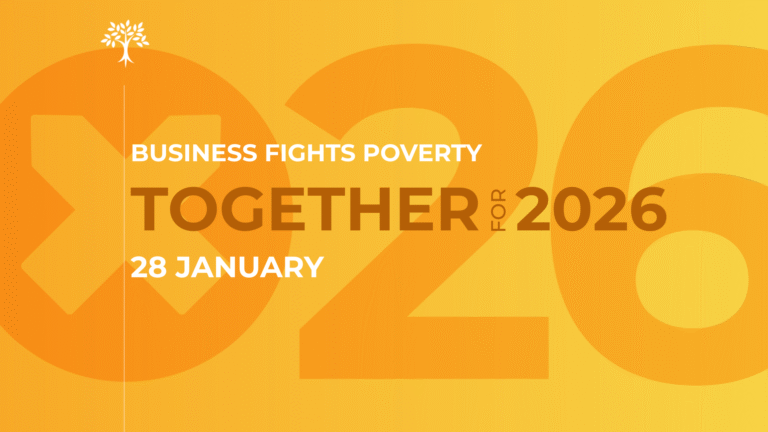
At the start of every year, the Business Fights Poverty community comes together to explore how we can collectively navigate the opportunities and challenges of the year ahead. This online event is a unique opportunity to connect, share insights, and collaborate on key trends and strategies to deepen partnerships for impact.